Monday, September 14, 2015

Week 4 - Reading Diary A: PDE

Ramayana PDE 61-80

63. Indrajit
This story may be my favorite yet. It again seems to be one of those times where "justice finds a way". The brothers and the monkeys attack Lanka and are succeeding until dark. In darkness is when Rakshasas are in their strongest forms. Indrajit also ends up using his deceit and trickery to bind the two brothers. Ravana then shows them to Sita and she falls into despair, believing that they are defeated.
Then the moment occurs where justice finds a way. Garuda whose origin or purpose is not yet known, appears and heals the brothers. This boosts the morale of the monkeys and they prepare to freshen their attack on Lanka.

71. Ravana's Death
I like this story because Rama and Lakshmana are finally able to overcome Ravana and defeat him. Rama struggled at first to attack Ravana effectively. He kept striking and cutting off the heads of Ravana but new heads kept appearing. Rama finally used a special flaming weapon to pierce and cut the heart of Ravana. This proved to be a quick death for Ravana.

Rama and Lakshmana attack Ravana
78. Valmiki's Hermitage
This is a sad story. The many people of the kingdom of Ayodhya no longer believed that Sita was pure and fit for Rama. Rama addresses this by banishing Sita to the jungle to stay at the hermitage of Valmiki for some time. It was so long in fact that the sons of Rama and Sita grew to be of age, beyond the knowledge of Rama.

Weapons of the Epics - Possible Styles

Topic
The topic that I have gravitated towards for my storybook is the "weapons of the epics". I would like to examine the various types of weapons used in the books. I would like to look at weapons of both earthly and heavenly origins and how they were used. This topic interests me because I have always been interested in the history of warfare and the weapons used. The first story that I immediately thought of was the story of the Slaying of Thataka. Another story from the Ramayana PDE is the story of how Rama wins Sita by breaking Shivas bow.

Bibliography
Thataka
Title: Indian Myth and Legend
Author: Donald A. Mackenzie
Illustrator: Warwick Goble
Year: 1913

Rama Wins Sita
Title: Indian Myth and Legend
Author: Donald A. Mackenzie
Illustrator: Warwick Goble
Year: 1913
and
Title: Ramayana, The Epic of Rama, Prince of India
Author: Romesh Dutt
Year: 1899

Styles
1. The first style I thought of was to explore and investigate the weapons in a manner of a TV show that I used to watch called "Futureweapons". On this show a former Navy Seal would look into new weapons that were in development and explore the possibilities of these new weapons. I could create a person or being that would investigate and examine the "weapons of the epics" in the same manner.

2. A second possible style would be to look into and/or create origins or origin stories for many of these weapons. Perhaps a weapon was originally built by an ordinary human but was used by an extraordinary warrior that used and elevated the status of a particular weapon. Or how the gods were maybe bored one day and went out back to the workshop to toy around.

3. A third style could be the stories about these weapons but told their the eyes of such weapons. This could be interesting in that some weapons could have their own wants and desires and could be used in a way that could go against that. Or perhaps a particular weapon waited it's whole life for a certain event, like when Rama broke Shiva's bow.

4. Another style could be something like answering which weapon is the greatest. Have a type of tournament where weapons and/or their stories are stacked up against each other to see which ones are more and less powerful and eventually choose the ultimate weapon of the epics.

Rama Breaks the Bow of Shiva

Wednesday, September 9, 2015

Week 3 - Reading Diary B

48. Sampati
This story is about the monkeys that Sugriva had sent out in search of Sita on the behalf of Rama. The group of monkeys that were sent south had reached the ocean and were wary of returning with no sign of Sita, much less without any information. This is where the monkeys came in contact with Sampati, Jatayu’s brother, who provided them with the exact information they needed.
I like this story because here, like many other stories so far, justice and love always seems to find a way in some form or fashion. Just when the monkeys thought that the search for Sita had failed, there all of a sudden arose a new development.

50. Hanuman’s Leap
This story is about the great Hanuman rising to the occasion. to me it seems that every great story has a moment like this but the words written in the version struck me in a good way. The paragraph about Hanuman climbing Mahendra was very awe inspiring. They way Hanuman grew to the occasion was awesome (in the actual sense of the word). I like very much how the author described the situation.

57. The Burning of Lanka
This is another story about Hanuman. In this story Hanuman has made it to Lanka and finds Sita, only to be captured. The Rakshasas set Hanumans tail on fire but made a mistake by bounding his hands a second time which actually loosened his hands. While his tail was on fire, Hanuman broke his bounds, grew to a great size again, and razed half of Lanka.
I like this story because Hanuman is again able to use his abilities to grow and while he tail was on fire, was able to defeat many rakshasas on his own.

Hanuman and Lanka on fire
source

Tuesday, September 8, 2015

Week 3 - Ready Diary A


26. Viradha
I liked the twist provided in this story, how the Rakshasa Viradha, was not capable of being slain by weapons. Rama and Lakshmana loosed many arrows with extreme accuracy, which would have defeated any other kind of Rakshasa or beast. While the arrows did penetrate and draw blood, they seemingly had no effect on Viradha. The brothers then attacked Viradha with their swords to the same effect. Only by throwing Viradha into a large pit, were they able to defeat the Rakshasa.
I also liked how in securing Viradha’s defeat, the brothers were essentially able to release him from a curse that was cast upon him and he was able to return to heaven.

Viradha
Source


29. Lakshmana and Shurpanakha
Again I seem to gravitate towards the conflicts and battles. While there isn’t an epic and detailed battle here, is it said that Rama slain 14 rakshsasas with celestial arrows. It goes to show that Rama is very powerful.
Lakshmana too is described with a little detail in how he struck down Shurpanakha. He is described as being as fast as lightning.
I’m definitely interested to see if and how this battle with 14,000 rakshasas will go down. Just a little side note, I noticed how at first Khara sent 14 rakshasas then called for 14,000. I’m wondering if there is something special about the number 14.

36. Jatayu and Ravana
In this story Sita is carried off by Ravana. Sita sees and calls upon Jatayu, a great vulture, for aid. Jatayu does his best in order to help Sita by attacking Ravana and slowing their flight. Jatayu is no match for Ravana who pierces him with many arrows and cuts off his wings.
What I like about this story is how willing and unafraid Jatayu is in offering aid to Sita, even to the point of death.

Sunday, September 6, 2015

Week 2 - Brainstorming

Weapons of the Epics - I remember watching a television show a few years back. I think it aired on the Discovery channel and was hosted by a retired Navy Seal who knew a lot about weapons. In this show he would show off and demonstrate new weapons that were in development, hence the name of the show. I could essentially create a person or being to “host” a show and demonstrate the various weapons and their abilities.


research - For this project, I would be learning about the various kinds of weapons used throughout the stories. This could include the types of weapons, their names, their special powers, who utilized them, and who they defeated.


Lifestyles of the Rich and Famous - This topic would again be another play on a television show, obviously titled “Lifestyles of the Rich and Famous”. It could be pretty interesting to portray the lifestyles of the characters in the same fashion of that show. Showing their homes and possessions could be pretty entertaining. Once again, I would essentially create a person or being to “host” a show and show off the lifestyles of the various characters in these stories.


research - For this project, I would be learning about the places and possessions of the various characters in the stories. The cities where they lived, the homes where they dwelled, the possessions they owned, their wealth.


Archery - This possible topic definitely piques my interest because I do have a huge appreciation for anything related to archery. I like how the weapons from these epics can have their own names, important histories, and special powers. To me, these things alone make these stories more interesting and fun to read and learn about. This would come across in a manner that would be less like a “show” from the first two ideas. It would more informational and informative rather than entertaining.


research - The project would be similar to the future weapons idea but would be far more in depth and specific about bows and archery. This would cover the various bows, their names, their powers, who used them, who they defeated, their origins, and so on.


Epic Epic Battles - Epic battles from the Epics. The history of warfare has always been something that I have liked to learn about. This topic would fall in line with that interest that I have. Learning about certain battles is always interesting because there have been many instances in history where a completely certain armies or forces have claimed special victories despite being undermanned, underpowered, and outnumbered.

research - This specific topic would require research about armies, wars, heroes, and weapons.

Wednesday, September 2, 2015

Week 2 Storytelling: Brothers in Blood

Bangana and Bangala, two brothers in blood. Their stripes nearly identical save for some markings on their foreheads. Two of the noblest tigers in all the jungle. They were following a deer named Sambaran. Sambaran was an old and wise animal who knew all the ancient tales of the land. Sambaran was old but strong in stature and his antlers were tall and wide, providing further evidence to his age and wisdom.

Bangana and Bangala
source
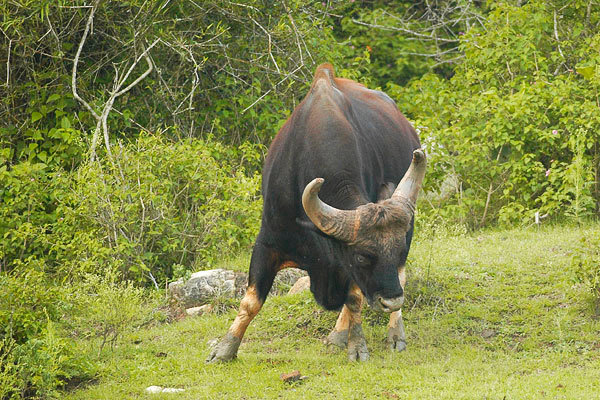
They were trekking through the deep jungle, a place haunted by history and scarred by time. Other large beasts were tracking their movement but dared not attempt to strike at the two brothers or their guide. In this jungle lived a beast that was unknown to time but not unknown to the legends. The beast was named Gaurat. Gaurat was a disfigured and gnarly bison, changed by evil and time. It had dark skin that was akin to rotting leather and horns that were bent and cracked. Its legs were white like bare bone.

Bangana roared a challenge to Gaurat who obliged without thought. Bangana and Bangala quickly entered battle with Gaurat who stood no chance against the strength and skill of the brothers. Bangana struck at Gaurat, breaking her legs and blinding her. Bangala broke her horns and tore off her matted tail. Gaurat who was not completely defenseless, shape-shifted into a hare in an attempt to escape. The hare was bloodied and beat and tried to jump as fast as she could but could not match the speed of the brothers. Bangana swiped one final blow and killed the hare.

Sambaran sang praises and chanted mantras. The heavens sang back at the brothers and provided them with increased strength and skills. Sambaran led the brothers to one of the many places that he and others like him chose to bed down. A number of deer were there and welcomed them all and gave gifts in thanks for defeating the wretched bison. This place was situated in a clearing with a clear view of the sky and was surrounded by numerous colorful and flowering plants. The birds sang and chirped their delights in praise of the brothers and put them at ease after their battle.

Gaur Bison
source
After resting for some days, a whole herd of bison trampled upon the clearing in search of revenge. The brothers reacted immediately in order to preserve this place that was such a pleasant refuge in the wilderness. The brothers used their newly increased strength and skills to quickly kill this herd of bison. After defeating half of the bison, Bangana roared so loudly that the remaining bison relented their attack and ran away in complete fear. They all ran in any possible direction for days and days and ran so far apart that they were unable to regroup for years. The many deer, led by Sambaran, were in awe of the brothers and gave thanks to them for not only defeating Gaurat but ridding the jungle of the bison altogether.


Author's note: My storytelling last week replaced animals with humans so I thought I would do the opposite this week. The names I used for this story are all related to the types of animals that can be found in India: Bengal tigers, Sambar deer, and Gaur. The plot here still pretty much follows the plot of the original story of Thataka with only one noticeable change; instead of sons seeking revenge like in the story of Thataka I chose to have a whole herd of bison attack the brothers in the clearing. I think the images shown here fit well for the story that I wrote. There is a picture of two tigers to represent the two brothers. The picture of the Guar does not necessarily represent Gaurat but does show what the other bison would look like. I did also use the image of the Gaur bison to create the original description of Gaurat but I then modified Gaurat’s description to show that he was different from all of the other bison. My overall motivations were to keep the same story but show it in a different light. I chose to use this story because I enjoy reading about the battles and combat so modifying it was fun and interesting!

This is the first story that I am adding to my Storytelling Portfolio.


Title: Indian Myth and Legend
Author: Donald A. Mackenzie
Illustrator: Warwick Goble
Year: 1913

Tuesday, September 1, 2015

Reading Diary A: PDE

I have decided to read the Ramayana Online: Public Domain Edition partly because I am interested to see the different ways that the various authors have interpreted the Ramayana.

One of the first things that stuck out to me, right in the first page is the description of the palace of Dasharatha. This was a palace that projected strength and power and I enjoyed description of the fierceness of its guards.

I also enjoyed it quite a bit when Rama was able to obtain the celestial weapons from Vishwamitra after defeating Thataka. It was new and interesting to me that they appeared as spirits

Rama and Lakshmana battle the Rakshasas

Another story that I thought was interesting was when Rama was able to complete the challenge of King Janaka with ease. It reminded me very much of the story of the sword in the stone, where only one good person, true in heart and mind, could take hold and remove a sword that was thrust into a stone and anvil. Rama is only rajah that seems to be capable of handling the bow and thus wins the right to take and marry Sita.

Generally speaking, I do enjoy how important the bow and archery seems to be in these stories.